Earnings growth is the single most important factor in stock performance. Companies with accelerating earnings attract institutional buyers, drive analyst upgrades, and ultimately push stock prices higher. But not all earnings growth is equal.
This guide walks you through a systematic process for evaluating a stock's earnings quality before you buy. Whether you follow CANSLIM, growth investing, or any fundamental-driven strategy, these seven steps will help you make more informed decisions.
Check the EPS Trend
EPS (Earnings Per Share) is the bottom line divided by outstanding shares. It tells you how much profit a company generates per share of stock. Start by looking at quarterly EPS over the last 6-8 quarters.
What matters most isn't the absolute number. It's the year-over-year growth rate. Compare each quarter to the same quarter one year ago. A stock showing 25%+ YoY EPS growth is showing real strength. If that growth rate is accelerating (going from 20% to 35% to 50%), that's an even stronger signal.
Watch out for one-time gains that inflate EPS. Sustainable growth comes from the core business, not from selling assets or tax benefits.
In EarningSpike
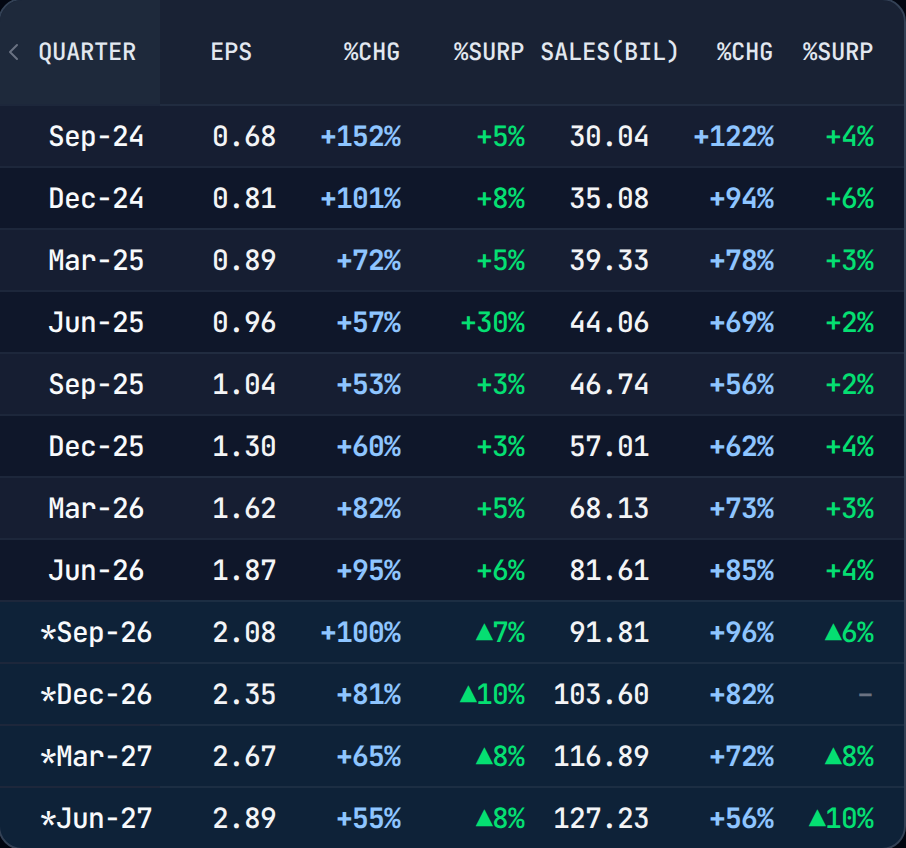
The earnings table shows 8 quarters of EPS data with YoY % change. Green highlights indicate positive growth. Look for consecutive quarters of accelerating growth in the “EPS Change” column.
Look at Revenue Growth
Revenue (sales) is the top line. While EPS tells you about profitability, revenue tells you about business demand. A company can grow EPS through cost-cutting or share buybacks, but growing revenue means customers are actually spending more.
Look for revenue growing at least 20% year-over-year. The ideal scenario is both EPS and revenue growing together. That confirms the earnings growth comes from real business expansion.
If EPS is growing 40% but revenue is flat, be cautious. That growth likely comes from margin expansion or buybacks, which have natural limits.
In EarningSpike
Revenue data appears alongside EPS in the earnings table with its own YoY % change column. Compare the EPS and revenue growth rates side by side to confirm earnings quality.
Evaluate Earnings Surprises
An earnings surprise happens when a company reports EPS above or below what analysts expected. A positive surprise (beat) means the company outperformed expectations. A negative surprise (miss) means it fell short.
One beat can be luck. But a stock that consistently beats estimates over 3-4+ quarters shows something important: management is executing well and analysts haven't fully caught up. This creates a dynamic where estimates keep getting revised upward, which attracts institutional buyers.
Pay attention to the magnitude of surprises too. Beating by 1% is different from beating by 15%. Larger beats suggest analysts are significantly underestimating the business.
In EarningSpike
The earnings table shows the surprise percentage for each quarter: how much EPS beat or missed the consensus estimate. Look for a consistent pattern of positive surprises.
Compare Analyst Estimates
Forward-looking estimates tell you what the market expects next. Check the consensus EPS and revenue estimates for upcoming quarters. Are analysts projecting continued growth, or a slowdown?
More importantly, track estimate revisions. When multiple analysts raise their estimates, it signals growing confidence in the company's trajectory. Rising estimates are one of the strongest predictors of future stock performance.
Be wary of stocks where estimates are declining. Even if the stock has beaten in the past, falling forward estimates suggest the growth story may be fading.
In EarningSpike
Estimate rows are marked with an asterisk (*) in the earnings table. The surprise column on these rows shows the size and direction of recent analyst revisions. Click any estimate row to see the full revision history: how consensus EPS and revenue have changed over time, and how many analysts are covering.
Check Insider Activity
Insiders (CEOs, CFOs, board members) know their company better than anyone. When they buy shares with their own money, it's a confidence signal. They're putting personal capital at risk because they believe the stock is undervalued or the business outlook is strong.
Insider buying before an earnings report is particularly meaningful. If a CEO is buying shares weeks before results, they likely expect the numbers to be good. Conversely, heavy insider selling can be a warning sign, though insiders sell for many reasons (diversification, estate planning, etc.).
Focus on cluster buying: several insiders buying around the same time. That's a much stronger signal than a single insider purchase.
In EarningSpike
The insider section shows recent buy and sell transactions with dates, amounts, and the insider's role. Look for cluster buying from multiple executives as a strong confirmation signal. Sign up free to access this data.
Track Institutional Buying Activity
Institutional investors (mutual funds, pension funds, hedge funds) move the market. When they accumulate shares, it creates sustained buying pressure that drives prices higher over weeks and months. Their research budgets dwarf what any individual investor can do, so their buying patterns carry real informational weight.
The key metric to watch is the number of institutional holders quarter over quarter. A stock that goes from 500 to 550 to 620 institutional holders across three quarters is seeing broad-based accumulation. Many different funds independently decided the stock is worth owning. That's far more meaningful than a single large purchase.
Be cautious if the number of holders is declining even as the stock price rises. That divergence can signal that smart money is distributing shares into retail demand, a classic late-stage pattern. The ideal setup is rising institutional holders alongside strong earnings growth and positive surprises.
In EarningSpike
The institutions tab shows the number of institutional holders over recent quarters, plus the largest holders and recent position changes. Look for a steadily increasing holder count as confirmation of broad institutional demand. Sign up free to access this data.
Use a Screener to Find Candidates
Steps 1-6 tell you how to evaluate a single stock. But how do you find stocks worth evaluating in the first place? That's where a screener comes in.
Set up filters for the criteria that matter: minimum EPS growth rate, positive earnings surprises, recent insider buying. A good screener saves hours of manual research by narrowing thousands of stocks down to a focused watchlist.
Run your screener weekly to catch new stocks entering their growth phase. Earnings seasons (January, April, July, October) are especially productive times to screen for fresh beats and accelerating growth.
In EarningSpike
The EarningSpike screener lets you filter by earnings growth, insider activity, analyst upgrades, and more. Build a watchlist of stocks that pass your fundamental criteria, then dive deeper with the earnings table.
Open the screener →Common Questions
FAQ
What is a good EPS growth rate?
For growth stocks, look for quarterly EPS growth of at least 25% year-over-year. The best growth stocks often show accelerating EPS growth, for example going from 20% to 30% to 50% over consecutive quarters.
Why do earnings surprises matter?
Earnings surprises indicate that a company is outperforming expectations. Stocks that consistently beat estimates tend to outperform, as each surprise forces analysts and institutions to revise their models upward, creating buying pressure.
How do I know if revenue growth is real?
Revenue growth confirms EPS quality. If EPS is growing but revenue is flat, the gains may come from cost-cutting or share buybacks, which are less sustainable. Look for both EPS and revenue growing together.
What does insider buying signal?
When company executives buy shares with their own money, it signals confidence in the company's future. Insider buying before earnings is particularly bullish, as insiders have the best visibility into upcoming results.